Your Cerebellum Might Be the Key to Controlling Road Rage
Here’s something that might surprise you: the next time you feel your blood boiling in traffic, the real culprit isn’t just stress or frustration—it’s actually a cluster of specialized brain cells tucked away in your cerebellum, a region most people associate solely with balance and coordination.
Recent groundbreaking research from Tohoku University has revealed that Bergmann glial cells in the cerebellar vermis act as biological dimmer switches for aggression. Using advanced fiber photometry techniques, scientists observed these cells adjusting their calcium levels in real-time as mice engaged in territorial fights. When aggression peaked, calcium surged. When conflicts subsided, the levels dropped dramatically.
This isn’t just academic curiosity—it represents a fundamental shift in how we understand anger management. For decades, therapeutic approaches have focused on cognitive strategies and pharmaceutical interventions targeting neurotransmitter systems. But this research suggests we’ve been looking in the wrong place entirely.
The implications are staggering: imagine being able to dial down aggression at the cellular level, potentially offering hope for everything from domestic violence prevention to managing explosive anger disorders that affect millions worldwide.
The Cerebellum: More Than Your Balance Center
Most people learned in high school biology that the cerebellum controls movement and balance. It’s that wrinkled, cauliflower-shaped structure at the back of your brain, accounting for about 10% of your brain’s total volume but containing over half of all your neurons.
But here’s what your textbooks probably didn’t tell you: the cerebellum is deeply involved in social behavior, emotional regulation, and yes—aggression control.
The cerebellar vermis, a narrow strip running down the middle of the cerebellum, has emerged as particularly important for social cognition. When this region malfunctions, it can contribute to the social difficulties seen in autism spectrum disorders and schizophrenia. Brain imaging studies have consistently shown abnormal vermis activity in individuals with these conditions, particularly when they struggle with social interactions.
What makes this discovery even more intriguing is that the cerebellum connects to virtually every other brain region. It receives input from the cerebral cortex, brainstem, and spinal cord, while sending projections back to areas involved in emotion, decision-making, and social behavior. This positions it as a potential master regulator of complex behaviors like aggression.
The Glial Revolution: Half Your Brain, Barely Understood
To understand why this research matters, we need to talk about one of neuroscience’s most overlooked players: glial cells.
For most of neuroscience history, glial cells were considered the brain’s janitors—important for cleaning up cellular debris and providing structural support, but not involved in actual thinking or behavior. The name itself comes from the Greek word for “glue,” reflecting how little credit these cells received.
This dismissive attitude was spectacularly wrong.
Glial cells make up approximately 50% of all cells in your brain. They’re not passive support staff; they’re active participants in neural communication, memory formation, and as this new research shows, behavioral regulation. They control the chemical environment around neurons, release signaling molecules, and can even influence how neurons fire.
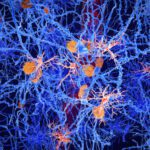
The specific type of glial cell studied in this research—Bergmann glial cells—are particularly fascinating. These cells wrap around Purkinje neurons in the cerebellum like protective sheaths, controlling the flow of ions and neurotransmitters in the immediate vicinity. They’re perfectly positioned to modulate neural activity and, consequently, behavior.
Fighting Mice Reveal Hidden Truths
The Tohoku University team employed what researchers call the resident-intruder model—essentially organized mouse fights under controlled laboratory conditions. One mouse (the resident) defends its territory when an unfamiliar male (the intruder) enters its cage.
What happens next is remarkably systematic: combat rounds lasting about 10 seconds occur roughly once per minute, with dominance shifting dynamically between the combatants. Sometimes the resident wins; sometimes the intruder gains the upper hand.
Using their innovative fiber photometry method, the researchers could observe intracellular calcium levels in cerebellar glia in real-time during these encounters. Calcium serves as a crucial cellular messenger, and its levels provide a window into cellular activity.
The results were striking: when a mouse gained dominance, glial calcium levels dropped. When it found itself losing, calcium surged. This wasn’t random fluctuation—it was a precise correlation between cellular activity and behavioral dominance.
Even more fascinating was what happened when fights ended. The researchers observed 4 to 6 Hz theta band oscillations in the cerebellum, accompanied by sustained increases in glial calcium levels. These theta waves are associated with states of calm alertness in many brain regions.
The Pattern Interrupt: Everything You Know About Aggression Control Is Incomplete
Here’s where conventional wisdom gets turned upside down: most anger management strategies focus on conscious cognitive control or pharmaceutical intervention targeting neurotransmitter systems like serotonin and dopamine.
But what if the real control center has been hiding in plain sight?
Traditional approaches assume that aggression originates in the limbic system—particularly the amygdala—and that higher-order brain regions like the prefrontal cortex must override these primitive impulses through willpower and rational thought.
This cerebellar research suggests a completely different model: aggression might be regulated at a much more fundamental level by glial cells that most people have never heard of. Instead of trying to override aggressive impulses after they’ve already formed, we might be able to prevent them from arising in the first place.
Consider the implications: anger management classes teach breathing techniques, cognitive reframing, and behavioral strategies. These approaches work for some people, but they require conscious effort and can fail under stress. Pharmaceutical interventions often come with significant side effects and don’t work for everyone.
But targeting cerebellar glia could potentially offer a more direct, biological approach to aggression control—one that operates below the level of conscious awareness.
The Optogenetic Breakthrough
The most compelling evidence for cerebellar glia’s role in aggression control came from the team’s optogenetic experiments. Optogenetics is a cutting-edge technique that allows researchers to control specific brain cells using light.
When the researchers stimulated cerebellar glia using precisely timed light pulses, something remarkable happened: the theta band oscillations appeared immediately, and fighting behavior stopped earlier than normal. This wasn’t correlation—it was direct causation.
The implications are profound: if light stimulation of these cells can interrupt aggressive behavior in mice, what might be possible with more sophisticated interventions in humans?
Optogenetics isn’t currently viable for routine human use, but the principle it demonstrates—that direct glial stimulation can modulate aggression—opens entirely new therapeutic possibilities.
From Survival Tool to Social Problem
It’s important to remember that aggression isn’t inherently pathological. It’s an evolutionary adaptation that helped our ancestors survive in dangerous environments. The ability to defend territory, compete for resources, and protect offspring required controlled aggression.
The problem isn’t aggression itself—it’s uncontrolled aggression in modern contexts where physical confrontation is rarely appropriate or effective. Road rage, domestic violence, workplace conflicts, and international tensions all represent aggression that’s either misdirected or disproportionate to the actual threat.
This cerebellar research suggests that healthy aggression regulation might depend on properly functioning glial cells. When these cells can’t adequately modulate neural activity, aggression might become excessive or inappropriate.
The Clinical Horizon
Lead investigator Yuki Asano envisions a future where anger management strategies target glial activity in the cerebellum. This could potentially help with excessive aggression and violent behavior through therapeutic strategies that adjust glial function.
Current therapeutic approaches might include:
- Targeted medications that specifically influence glial calcium signaling
- Neurofeedback training that teaches people to modulate their own cerebellar activity
- Deep brain stimulation techniques adapted for cerebellar glia
- Lifestyle interventions that support healthy glial function
The pharmaceutical possibilities are particularly intriguing. Most current psychiatric medications target neurons directly, but drugs that specifically influence glial cell function could offer fewer side effects and more precise behavioral control.
The Broader Implications
This research fits into a larger revolution in neuroscience that’s revealing glial cells as active participants in mental health and behavior. Similar studies have implicated glial dysfunction in depression, anxiety, schizophrenia, and neurodegenerative diseases.
The therapeutic potential extends far beyond aggression control. If cerebellar glia influence social behavior more generally, interventions targeting these cells might help with:
- Autism spectrum disorders, where social interaction difficulties are central
- Social anxiety, which often involves excessive threat perception
- Impulse control disorders, where behavioral regulation is impaired
- Post-traumatic stress disorder, where hypervigilance and aggression are common
Technical Challenges and Limitations
While the research is groundbreaking, significant hurdles remain before clinical applications become reality. The fiber photometry technique used in this study, while innovative, isn’t yet suitable for routine human use.
Current limitations include:
- Species differences: mouse aggression doesn’t perfectly mirror human aggression
- Technical complexity: monitoring glial activity in living humans requires sophisticated equipment
- Individual variation: people likely differ in their cerebellar glial function
- Ethical considerations: directly manipulating brain cells raises important questions about consent and autonomy
Future Research Directions
The most immediate next steps involve translating these findings to human studies. Researchers need to determine whether similar glial-aggression relationships exist in human cerebellums and whether they can be safely modified.
Advanced brain imaging techniques might allow scientists to monitor human cerebellar glial activity non-invasively. Technologies like functional near-infrared spectroscopy (fNIRS) and advanced MRI sequences could potentially detect glial calcium fluctuations in real-time.
Genetic studies might reveal whether people with naturally aggressive tendencies have different glial function patterns, potentially leading to personalized interventions.
A World Without Social Conflict?
Yuki Asano’s vision of “a world without social conflict” might sound utopian, but it reflects the profound potential of this research. By harnessing the innate ability of cerebellar glia to control aggression, we might indeed move toward a more peaceful future.
This doesn’t mean eliminating all aggression—healthy assertiveness and competitive drive serve important functions. Instead, it means developing the tools to ensure aggression remains proportionate, appropriate, and under conscious control.
The path from laboratory discovery to clinical application is long and complex, but this research represents a fundamentally new approach to one of humanity’s oldest problems. For the millions of people struggling with anger management issues, and for a society grappling with violence at multiple levels, cerebellar glia might offer an unexpected solution.
The next time you feel anger rising, remember: somewhere in your cerebellum, specialized glial cells are working to keep that response in check. And soon, we might have the tools to help them do their job even better.